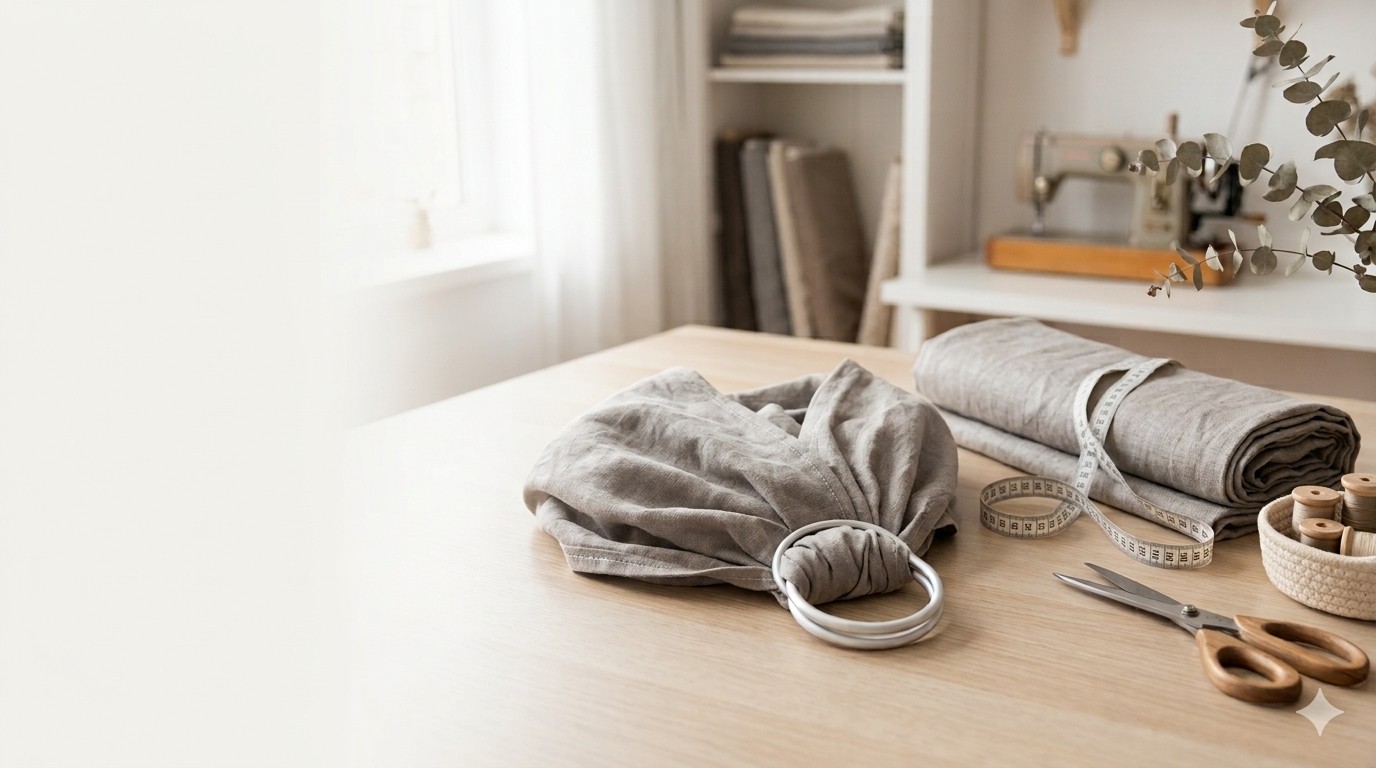
Selecting the right fabric is the most critical step for your child's safety and comfort. You want a material that is supportive, breathable, and has a slight texture so it doesn't slip through the rings.
Ideal Choices: 100% pure linen (highly recommended for beginners), medium-weight cotton, or broken-twill woven wraps. These fabrics naturally grip the rings and soften beautifully with use.
Fabrics to Avoid: Completely steer clear of materials with spandex or stretch (like jersey knit), slippery synthetics (like polyester silk), or overly heavy heavy canvas that will be too difficult to adjust.
How Much Fabric Do I Need? Plan for 2 to 2.5 yards of standard 45-inch wide fabric. This provides the perfect length for a standard tail that fits most body types.
Before you turn on your sewing machine, make sure you have the following gear ready on your crafting table:
1 Pair of Safety-Tested Aluminum Sling Rings: Never use craft store wooden or plastic rings, which can snap under weight. [Click Here to Shop Our Certified Canadian Sling Rings with Free Shipping])
2.5 Yards of Natural Fabric: Pre-washed and neatly ironed.
Heavy-Duty Thread: Opt for 100% polyester thread for maximum seam strength.
Tools: Sewing machine, fabric shears, sewing pins, and a fabric measuring tape.
Step 1: Pre-Wash and Prep Your Fabric
Always wash your fabric in hot water and dry it on high heat before cutting or sewing. Natural fibers like linen shrink significantly on their first wash. Iron the material completely flat so your seams stay perfectly straight.
Step 2: Hem the Three Open Edges
Cut your fabric to your desired width (typically 28 to 30 inches wide is ideal for a baby carrier). Fold the long raw edges over by 1/4 inch, fold over 1/4 inch again to hide the raw edge, pin it securely, and sew a clean straight stitch. Repeat this process for the bottom "tail" end of the fabric.
Step 3: Thread the Aluminum Rings
Take the remaining short, unhemmed edge of your fabric. Gather it together like an accordion and slide it through both of your aluminum baby carrier rings at the same time. Pull roughly 8 to 10 inches of fabric through the rings.
Step 4: Sew the Reinforced Weight-Bearing Shoulder
Fold the short 10-inch flap of fabric back over the rings so it meets the main body of the sling. This fold creates the shoulder piece that supports your baby's weight.
To ensure absolute safety, stitch this section down using a reinforced box-stitch pattern (a large square with an "X" sewn through the middle), followed by three parallel rows of heavy-duty straight stitching. This triple-reinforced seam guarantees the rings stay anchored permanently.
Choosing the Best Fabric for a DIY Baby Sling
Required Tools & Sewing Supplies
Step-by-Step Instructions to
Sew Your Ring Sling
Make a Safe,
Comfortable Baby Carrier at Home using Certified Sling Rings
Comfortable Baby Carrier at Home using Certified Sling Rings